


The Latimer family (nineteenth century)
The Latimers were Lords of the Manor of Heddington (sic, to be distinguished from the better-known Manor of Headington) from 1815 to 1871, and sold some of their land for the development of New Headington village in the early 1850s.

Edward Latimer (1775–1845) (left) was born in Kirklinton, Cumbria.
By 4 March 1797 he was listed in Jackson’s Oxford Journal as a trader who would accept banknotes, and the following year, at the age of 23, he was made a Freeman of the city and was trading as a wine merchant.
On 24 June the next year, he married Miss Elizabeth Jones at St Andrew’s Church in Headington: she was the niece of Mary Jones, then Lady of the Manor of Heddington.
The Latimers spent the first part of their marriage living in All Saints parish in Oxford (probably over their wine shop at 11 High Street), Mrs Latimer gave birth to fifteen children here in the eighteen years from 1800 to 1818.
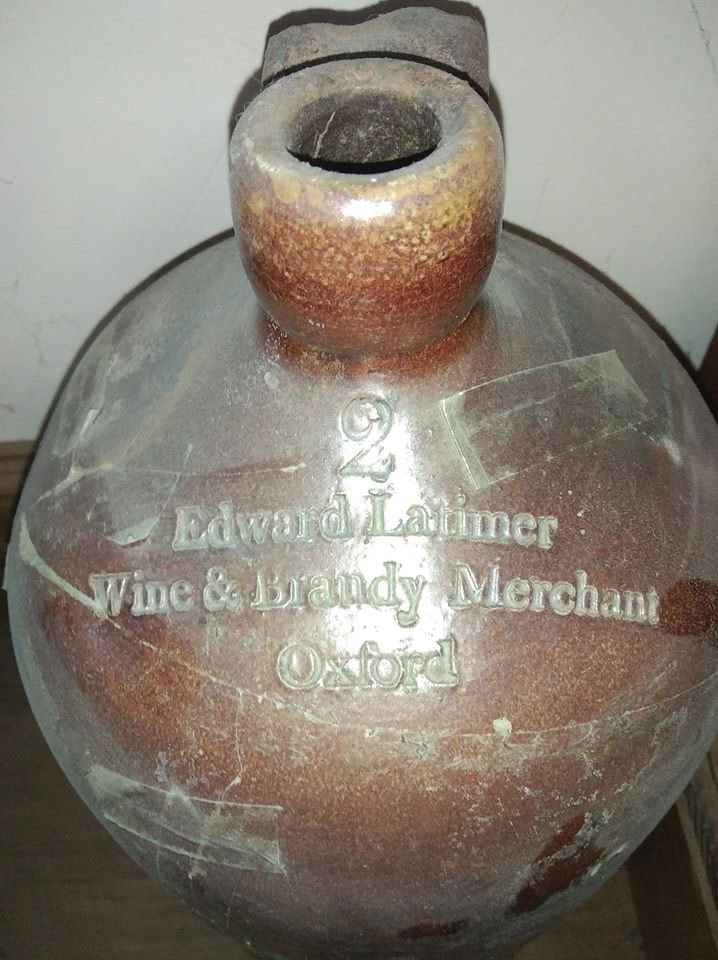
In 1804 Latimer was elected on to the city council, and purchased a Chamberlain's place in September 1814.
In 1815 Miss Mary Jones died, leaving Headington House and the Manor of Heddington to her niece and her husband. At first they only used the house as their country retreat, but in August 1818 they moved up permanently from All Saints parish in Oxford with their twelve surviving children.
It was in 1818 that the Latimers first started to hold manorial courts, and many of the people who lived in the village of Old Headington were their copyhold tenants. As well as Headington House and its grounds (which then stretched up to the London Road) they owned 26 acres of land to the west of Windmill Road, most of Bayswater including the mill, the site of Headington cemetery, and fields to the north and south of the Bayswater Brook.
Mrs Latimer's diary, written at Headington House between 1830 and 1836, survives. She died on 21 March 1843, and her husband Edward Latimer on 18 November 1845. This memorial to them was put up on the wall of St Andrew's Church, Headington:

TO THE MEMORY
OF
ELIZABETH LATIMER,
WHO DIED
MARCH 21ST 1843.
ALSO OF
EDWARD LATIMER,
HUSBAND OF THE ABOVE,
WHO DIED
NOVEMBER 18TH 1845.
THEIR REMAINS ARE DEPOSITED
IN THE FAMILY VAULT IN THIS
CHURCH YARD.
Under his will Edward Latimer instructed that Headington House and other land and property be sold, and the sale duly took place in June 1848. William Mead Warner, a speculative builder from Banbury, bought the land to the south of London Road, and in 1851 laid out New Headington village on the south side of the London Road: it then consisted of the present New High Street and Bateman Street, and the warren of small streets down as far as Wilberforce Street. Edward Latimer’s son William bought back the field now occupied by Kennett Road and it remained a market garden, which explains why that area was not developed until the late 1920s.
The children of Edward and Elizabeth Latimer
The twelve children who survived to adulthood were as follows:
- Elizabeth Mary Jones Latimer (1800–1891), known as Mary, remained a spinster, living in Headington until her death. She did many good works for St Andrew’s Church, and was one of Headington’s principal landowners in 1851. From 1817 to 1825 while living with her family first in Oxford and then at Headington House she kept a diary, which has survived. After her parents’ death she continued to live with her brother Digby in Headington. Her obituary in the Oxford Times described her as “one of the old school of gentlewomen”.
- John Edward Latimer (1801–1849) obtained his BA at Merton College in 1824, and moved to Birmingham, where he worked as an attorney.
- Jane Sturman Margaret Latimer (1802–1872) was subject to fits. She spent most of her life cared for by her younger sister Caroline.
- Edward William Forty Latimer (1803–1881) obtained his BA at Lincoln College in 1827, and served as Rector of Waddesdon in Buckinghamshire until his death.
- Digby Latimer (1808–1884) obtained his BA at Lincoln College in 1831 and was admitted as a barrister-at-law at Lincoln’s Inn in 1835. Following his marriage in 1844 he lived in Headington, first at 10 St Andrew’s Road and later at Unity House, and he was a Churchwarden at St Andrew’s Church from 1850 to 1864. Although he had two older brothers, after his father’s death in 1845 he became Lord of the Manor of Heddington presumably because he lived in the village. In 1871 he went bankrupt through working as a chemical agent and had to sell the lordship of the manor and the remnants of its land. He is buried in a railed grave just to the right of the main door of St Andrew’s Church, and his obituary in the parish magazine says, “He set a noble example of bearing crushing misfortune with cheerful courage.” He had no children.
- George Burton Potts Latimer (1809–1870) obtained his BA at Pembroke College in 1833 and was appointed perpetual curate at St Paul’s in Birmingham. He also worked as a chemical agent and went bankrupt at the same time as Digby in 1871.
- Charles Latimer (1810–1844) did not go to university and was made a freeman of the City of Oxford in 1832. On 10 March 1836 he emigrated to Upper Canada and was active in the reform agitation of 1837. He was in consequence sent to prison in December that year, but was acquit-ted of treason in the spring of 1838. He then went to the USA, where he joined the Patriot cause, working on a scheme to encourage Canadian emigration, and in1839 he was admitted to the Illinois bar. He died in violent circumstances in Wisconsin on 23 February 1844, when he was aged only 33.
- Sturman Latimer (1812–1892). Sturman was the only brother to go to Cambridge, obtaining his BA from Trinity College in 1834. He was a solicitor in Oxford, who was living in St Andrew’s Lane at the time of the 1851 census and then rented the Rookery in until 1857 before moving tor Old High Street. He was a Manager of the National School, Churchwarden of St Andrew’s from 1874 to 1878, and a member of the Headington Burial Board; he also helped to establish a reading room in Headington. His grave at St Andrew’s is near to his brother Digby’s.
- William Latimer (1813–1881) obtained his BA from Lincoln College in 1833, and held a curacy at Broughton near Banbury and then at Lambeth, retiring to Headington (Old High Street) by 1860. He was Chaplain to the Headington Union Workhouse from 1877 until his death.
- Frederic Latimer (1814–1870) did not go to university, but took over the family wine business. He and his wife Marianne lived at 37 St Andrew’s Road and then at Church House, and they had thirteen children baptised at St Andrew’s Church between 1847 and 1864. Like his brothers Digby and Sturman, he took a turn as Churchwarden of St Andrew’s, but in about 1867 he moved to the Iffley Road. He was buried in St Andrew’s churchyard on 9 September 1870.
- Caroline Stephens Latimer (1816–1880) married her cousin, John Latimer Nichol (brother of Miss Nichol of Jessamine Cottage in Old High Street) at St Andrew’s Church in 1838, and they lived at first in London and then Norwood in Surrey. They had no children. Caroline came back to Headington as a widow in 1872, and lived in Church House. She was buried in St Andrew’s churchyard.
- Louisa Latimer (1818–1873) never married, but lived with her sister Caroline, returning with her to Headington in 1872. She was buried in St Andrew’s Church the next year.
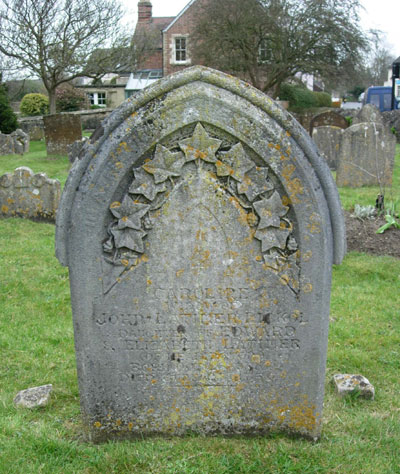
Left: Grave of Caroline Latimer (Mrs Nichol) in St Andrew's churchyard
Full history of the family (big PDF)
The Latimer Diaries |
|||
Author |
Dates |
Language |
Owner |
Miss (Elizabeth) |
16 Mar 1817– |
English |
Ann Kinross, Australia |
1 January– |
French |
Oxfordshire History Centre |
|
1 Oct 1821– |
Italian |
||
Mrs Elizabeth |
1 Jan 1830– |
English |
Simon Gleeson, UK |
26 June 1833– |
|||
