


Origin of Marston's street names
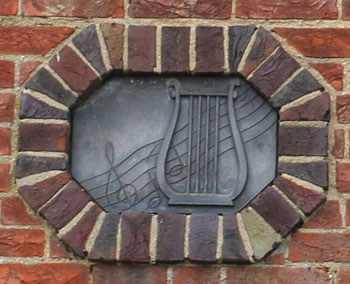
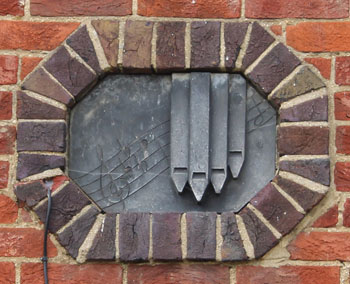
Musical plaques in New Marston
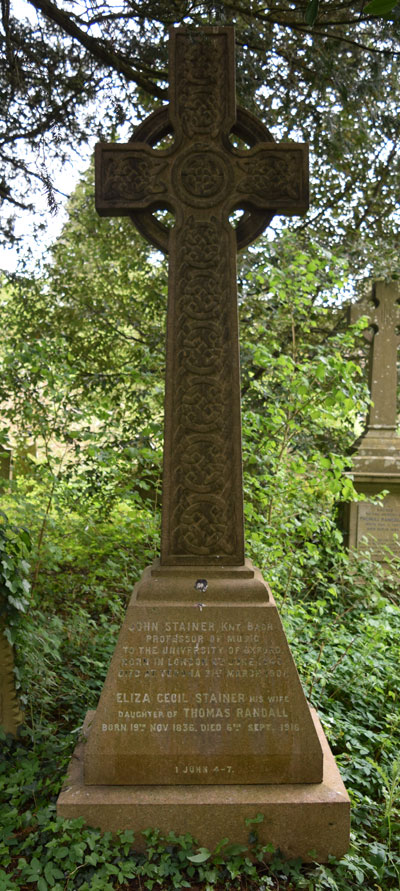
John Stainer's grave
Oxford musicians
The “music streets” of New Marston were named between 1935 and 1979 after Oxford musicians:
- Croft Road
William Croft (c.1677–1727)
Awarded an Oxford D.Mus. in 1713 - Crotch Crescent
William Crotch (1775–1847)*
Professor of Music at Oxford from 1797 - Farmer Place
John Farmer (1835–1901)**
Organist at Balliol College - Goodson Walk
Richard Goodson (c.1655–1718)
Professor of Music at Oxford 1682–1718
and his son of the same name
Richard Goodson (c.1688–1740/1)
Professor of Music at Oxford 1718–1742 - Hadow Road
Sir (William) Henry Hadow (1859–1937)
Doctor of Music at Oxford - Hayes Close
William Hayes (c.1708–1777)
Professor of Music at Oxford 1742–1777
and his son
Philip Hayes (c.1738–1797)
Professor of Music at Oxford 1777–1797 - Heather Place
William Heather (c.1563–1627)
Founder of Heather Professorship of Music at Oxford - Hugh Allen Crescent
Sir Hugh Percy Allen (1869–1946)
Professor of Music at Oxford 1918–1946 - Nicholson Road
Richard Nicholson (bap. 1563, d.1638/9) Choirmaster and Organist at Magdalen College and first Professor of Music at Oxford 1626–1639 - Ouseley Close
Sir Frederick Arthur Gore Ouseley,
second baronet (1825–1889)
Professor of Music at Oxford 1855–1889 - Parry Close
Sir Hubert Hastings Parry (1848–1918)
Professor of Music at Oxford 1900–1908 - Purcell Road:
Daniel Purcell (c.1670–1717)
Organist at Magdalen College - Stainer Place
Sir John Stainer (1840–1901)
Professor of Music at Oxford 1889–1900 - Taverner Place
John Taverner (c.1490–1545)
Organist at Christ Church - Weldon Road
John Weldon (1676/7–1736)
Organist at New College - Westrup Close
Sir Jack Allan Westrup (1904–1975)
Professor of Music at Oxford 1947–1971
The original “musical” streets of New Marston were Croft Road, Heather Place, Taverner Road, and Stainer Place. Many of the houses in those streets have one of the two musical instruments shown above right carved in on a plaque in a central position between the upper and lower floors (while others have the City coat of arms or the date 1935, including one on the Marston Road itself).
John Farmer is buried in St Sepulchre's Cemetery, Oxford: see his grave
John Stainer and his wife Eliza are buried in Holywell Cemetery, Oxford: see grave, right. Eliza was the daughter of the Oxford hatter Thomas Randall, who is thought to be the person who inspired Lewis Carroll's Mad Hatter
Civil War
- Arlington Drive: Henry Bennet, first Earl of Arlington (bap. 1618, d. 1685) entered the service of George, Lord Digby, secretary of state to Charles I, in 1643
- Cavendish Drive: Charles Cavendish (1620–1643) was a royalist army officer
- Cromwell Close: Oliver Cromwell (1599–1658), lord protector of England, Scotland, and Ireland. Came to meet Fairfax at the Manor House (now 15/17 Mill Lane), Marston
- Fairfax Avenue: Thomas Fairfax, third Lord Fairfax of Cameron (1612–1671), a Parliamentarian who besieged Oxford and had his headquarters at Marston
- Fane Road: Anne Spokes Symonds suggests that this could be named after John Fane, MP for Oxford (died 1924), or else a Captain Fane who served on the Bullingdon RDC when these roads were built. But it could also have been named after Mildmay Fane, second earl of Westmorland (1602–1666), a Royalist who turned Parliamentarian
- Nicholas Avenue: Sir Edward Nicholas (1593–1669) was Secretary-of-State to Charles I
Local people
- Boult’s Close: Named after the farm at the end of Boult’s Lane, farmed by the Haynes family
- Broughton’s Close: The Broughton family farmed Court Place Farm
- Cannon’s Field: The Cannon family farmed in Marston in the nineteenth century
- Cumberlege Close: The Revd H.A. Cumberlege was Vicar of Marston 1899–1904
- Dent’s Close: Doreen Dent married Oliver Haynes, second son of Charles Haynes
- Gordon Close: The Revd Richard Gordon (1804–77) was Vicar of Marston from 1849 to 1872
- Harlow Way: Professor Vincent Harlow lived at 14 Oxford Road
- Haynes Road: The Haynes family owned Cross Farm
- Horseman Close: Helen Horseman (died 1922) was the mother of Charles Haynes, who farmed Boults Farm
- Lodge Close: Named after Olive Lodge, one of the first women to be made a Deaconess (at Marston on 1 November 1972)
- Moody Road: Emma and Jane Moody were the two sisters who started up a nursery school that eventually evolved into Milham Ford School
- Mortimer Drive: The Revd J. H. Mortimer was Vicar of Marston 1905–1951
- Peacock Road: Probably named after Mark Beauchamp Peacock the elder and younger, local landowners
- Prichard Road: Alderman Mrs Mabel Prichard was a governor of Milham Ford School
- Raymund Road: Named after Raymund Haynes, who lived and farmed at Cross Farm, Old Marston for many years during the 19th and /20th centuries
- Rimmer Close: The Revd Paul Rimmer was Vicar of Marston from 1959 to 1990
- Rippington Drive: The Rippingtons were the biggest landowners in Marston in the nineteenth century
Topographical
- Ashlong Road: Local medieval field called Ashlong Furlong
- Clays Close: After local field spelt Great & Little Clay Close in 1840
- Copse Lane: After a local small wood
- Ferry Road: This road led to the Cherwell punt ferry from Marston to Holywell
- Jessops Close: Named after a local field on Boults Farm
- Marsh Lane: Marston was originally “Marsh Town”
- Mill Lane: Named after the mill it led to at Sescut Farm to the north
- Ponds Lane: Named after the ponds which used to surround the church, and the streams which ran along the sides of this lane
Unknown origin
- Beechey Avenue
- Ewin Close
- Lewell Avenue
- Lynn Close (apparently chosen by developers in 1966)
- Salford Road (apparently chosen by developers
